
According to CBRE’s 2026 India Office Occupier Survey, 74% corporate occupiers plan to expand their office portfolios in India over the next two years. As businesses plan for growth, the flexibility and operational convenience of managed offices are becoming increasingly relevant.
However, choosing the wrong workspace can lead to unexpected expenses, employee commute challenges and limitations on expansion. For companies exploring managed offices in Navi Mumbai, avoiding these mistakes starts with looking past the advertised rent and evaluating how well the office fits their operational needs.
Here are the common mistakes companies should avoid before finalising a managed office.
1. Comparing Only Rental Prices
A lower monthly rental may look attractive, but it does not always mean better value. Two different managed offices with similar prices may offer very different levels of infrastructure, maintenance and service quality.
For example, an office with a lower rental but unreliable internet or inadequate meeting rooms could create additional expenses and disrupt daily operations.
What should you compare?
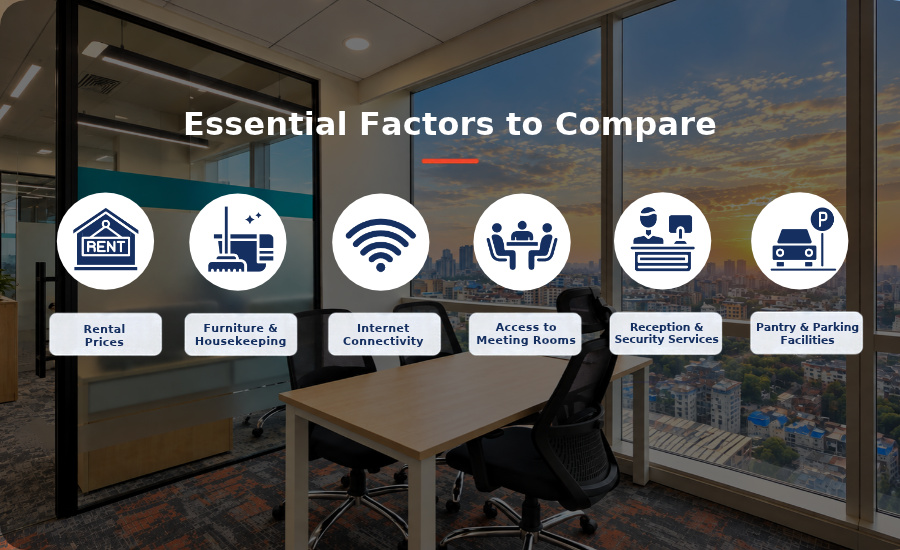
Evaluate each provider based on the facilities and services included in the quoted price. Check whether the package includes:
- Furniture, housekeeping and maintenance
- Internet connectivity and power backup
- Meeting and conference room access
- Reception services and security
- Pantry facilities and parking, where required
Also consider the time and resources your team would otherwise spend managing these services. A managed office should reduce operational responsibilities, not introduce new ones. When comparing fully furnished offices, confirm that the furniture, services and shared facilities you expect are included in the quoted fee.
2. Overlooking Hidden Costs
One of the most expensive mistakes is assuming that the advertised fee covers every office-related expense. Office space hidden costs can affect your budget when exclusions and additional charges are not clarified in advance.
Which charges should you check?
Before finalising a workspace, ask about:
- Security deposits and applicable taxes.
- Meeting room bookings and additional service charges.
- Parking, printing and upgraded internet facilities.
- Charges for additional seats or after-hours access.
- Annual rental increases and renewal fees.
- Exit charges, restoration costs and notice-period obligations.
Not every provider charges for these services separately. However, businesses should request a written cost breakdown that identifies recurring expenses, one-time payments and potential additional charges.
This allows you to compare the total cost of occupancy over the intended agreement period instead of making a decision based on the headline rental alone.
3. Choosing the Wrong Location
An office in a prominent commercial building may look appealing, but the location must also work for your employees and business operations. Difficult commutes, limited transport options and poor road connectivity can affect attendance and employee satisfaction.
Navi Mumbai offers several business hubs with different advantages.
How do you evaluate the right location?
- Vashi: Consider an office in Vashi for established commercial infrastructure, client accessibility, and connections to Mumbai.
- Seawoods: Evaluate it for railway connectivity and access to commercial developments around Seawoods and CBD Belapur.
- Turbhe: Consider its railway access and proximity to the Thane–Belapur Road corridor.
- Ghansoli and Airoli: Explore these areas for businesses operating around the eastern Navi Mumbai corporate and technology corridor.
- CBD Belapur: Evaluate an office for rent in Belapur for established commercial buildings and access to the wider Navi Mumbai business district.
Before selecting managed offices in Navi Mumbai, compare actual commute times during peak hours. Check parking availability, nearby amenities, and access to major roads rather than relying solely on the property’s advertised location.
4. Ignoring Future Growth
A workspace that accommodates your current team may become restrictive when hiring increases. Additional employees, new departments or introducing hybrid arrangements can quickly alter your space requirements.
Can the office scale with your business?
Before choosing a provider, clarify:
- Can additional seats or private cabins be added?
- Is a larger office available within the same building or location?
- Can the agreement accommodate changes in team size?
- Will expansion require a new contract or additional setup charges?
A scalable workspace helps businesses adapt without treating every stage of growth as a fresh relocation project.
When evaluating managed offices in Navi Mumbai, consider both your current headcount and your likely requirements over the next two to three years.
5. Assuming Every Facility is Included
Even ready-to-use offices can vary in what is included. Some providers include meeting rooms, IT support and utilities in their packages, while others offer them as paid add-ons.
What should you verify?
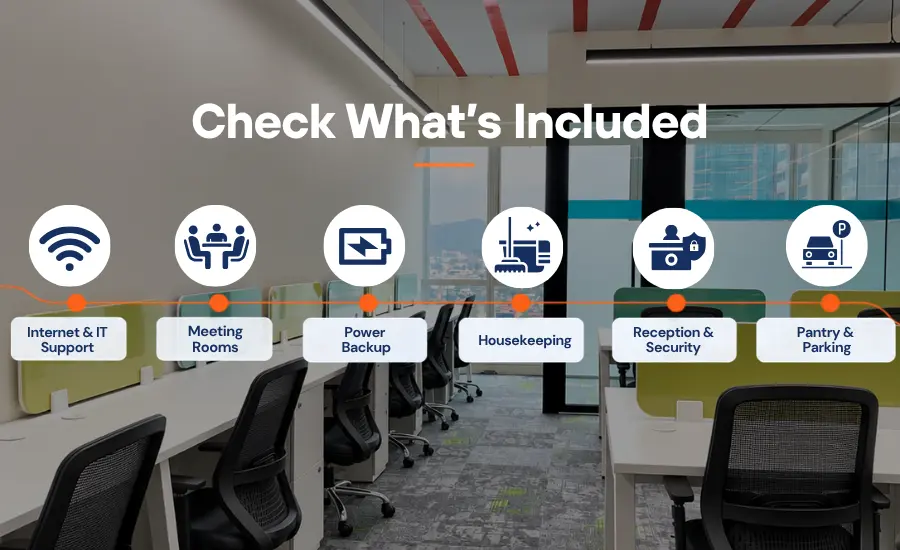
Check the availability and terms of:
- High-speed internet and technical support.
- Power backup and air conditioning.
- Meeting rooms and conference facilities.
- Housekeeping, maintenance and reception services.
- Secure access, visitor management and parking.
- Pantry facilities and other shared amenities.
A clear understanding of the facilities will help you compare providers accurately and avoid service disruptions after moving in.
JLL’s 2025 India office market report reported that flexible workspace operators accounted for 21.5% of India’s gross office leasing by occupier category in 2025. This growth highlights the relevance of flexible workspace options, but businesses still need to evaluate each provider’s actual service offering.
6. Overlooking Privacy and Security
Shared infrastructure can be convenient, but businesses must ensure that their office arrangement meets their security and privacy requirements.
Companies handling sensitive information may require enclosed cabins, private meeting rooms and restricted access.
What should you assess?
Consider the following before finalising a workspace:
- Team layout: Is there enough room for individual work, collaboration and meetings?
- Privacy: Can confidential conversations take place without interruptions?
- Customisation: Can the office accommodate your branding, furniture or department-specific requirements?
- Employee comfort: Is there sufficient lighting, ventilation and comfortable seating?
- Professional image: Does the space meet the expectations of employees, visitors and business partners?
7. Ignoring Contractual Terms
Managed offices offer operational convenience, but flexibility can vary significantly between agreements. Unclear terms can create problems when a company needs to expand, reduce its space or leave before the agreement expires.
Which clauses require attention?
Review the agreement for:
- Contract duration and renewal conditions
- Notice periods and early termination charges
- Security deposit refund timelines
- Annual rental escalation
- Rules for adding or removing seats
- Responsibility for repairs and damages
- Service-level commitments and maintenance responsibilities
Ask the provider to clarify any ambiguous clauses in writing. If your company expects significant changes in headcount, negotiate suitable provisions before committing.
A flexible office works best when the contract supports the same flexibility.
8. Skipping a Thorough Office Inspection
Photographs and virtual tours can help you shortlist properties, but they do not reveal every practical issue. Internet performance, noise levels, lift availability, or inconsistent maintenance can affect the daily working experience.
What should you check during a site visit?
Test the internet connectivity, inspect meeting rooms and observe the general condition of the premises. Ask how maintenance requests are handled and how quickly the provider typically resolves issues.
It is also useful to understand the building’s security arrangements, visitor procedures, emergency exits and fire-safety provisions.
You should also clarify what happens when essential services become unavailable. A professional workspace provider should be able to explain its operating procedures and responsibilities clearly.
Managed Office Checklist Before Signing
Use this checklist to compare shortlisted providers and make a more informed decision:
- Budget: Have all recurring fees, deposits, taxes and additional charges been disclosed?
- Location: Is the office accessible for employees and visiting clients?
- Infrastructure: Are internet, power backup and other essential facilities reliable?
- Facilities: Are meeting rooms, housekeeping and IT support included where required?
- Scalability: Can the space accommodate changes in team size?
- Privacy: Are security arrangements and confidential work requirements addressed?
- Agreement: Are lock-in, notice, renewal and exit conditions clearly documented?
- Inspection: Have you checked the premises and tested essential facilities?
- Support: Are maintenance responsibilities and escalation procedures defined?
Completing this checklist makes it easier to compare providers on consistent criteria and identify potential problems before signing.
Choose a Managed Office That Fits Your Business
Selecting the right workspace requires a clear understanding of your team’s needs, operating budget and future plans. For businesses exploring managed offices in Navi Mumbai, the decision should boil down to location, total occupancy costs, infrastructure, service quality, and contractual flexibility together.
At Officebing, businesses can explore managed workspace solutions suited to different team sizes and operational requirements. A careful evaluation of these factors can help you identify a workspace that supports daily operations while allowing room for future growth.
Looking for managed office space in Navi Mumbai? Start by defining your requirements, comparing the total cost of occupancy and arranging a site visit before making your final decision.
FAQs
1. What is a Managed Office?
A managed office is a fully furnished, ready-to-use workspace customised to a company’s requirements, with the provider managing the day-to-day operations, maintenance, and essential office services.
2. What should I check before choosing a managed office in Navi Mumbai?
Evaluate the location, total cost, included facilities, internet reliability, privacy arrangements and scalability. Review the agreement carefully and visit the premises to confirm that the workspace meets your operational requirements.
3. What hidden costs should I look for in a managed office?
Check for security deposits, taxes, paid meeting rooms, parking charges, additional IT services, rental escalation and exit fees. Ask for a written quotation that clearly separates recurring charges from one-time expenses.
4. Can I change my office size during the agreement?
That depends on the provider and the terms of your contract. Some agreements allow businesses to add seats or move to a larger office, while downsizing or early termination may involve restrictions. Discuss expansion, reduction and exit conditions before signing.